

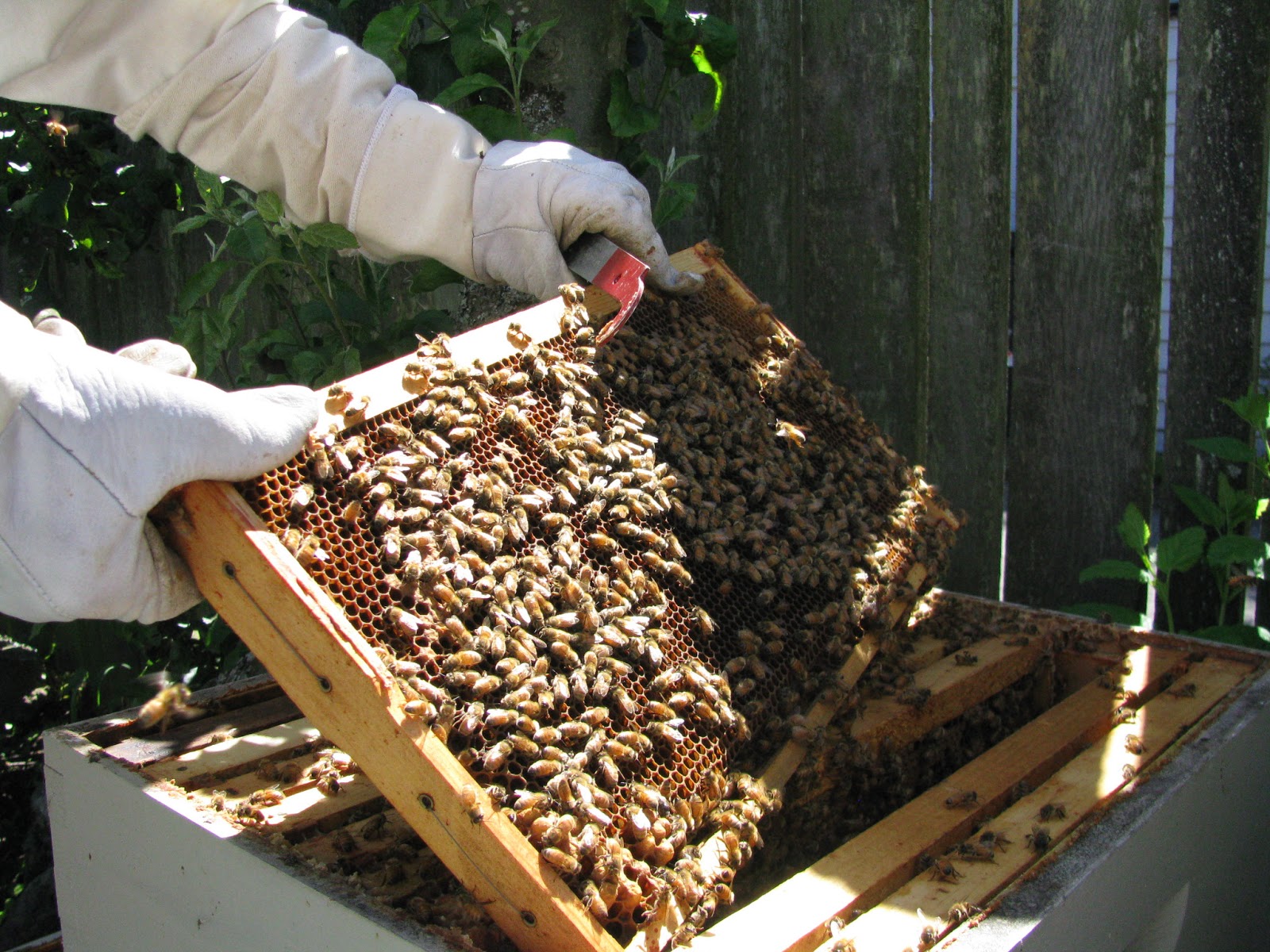
Spring beekeeping in Seattle means shifting from maintenance mode to honey production mode. The bees are producing lots of offspring right now — brood rearing is in full swing — and at least one of our hives has already gained 14 pounds in the last two weeks. That honey is staying with the bees for now: they need it for raising brood, and we cannot extract until the honey supers have surplus capped honey.
Swarm Prevention Work
Today task is visiting as many hives as possible to check for eggs and brood, and to move frames around to reduce swarm pressure. It has been warmer than usual in Seattle this spring, which means swarm season may start early. Moving frames of capped brood from crowded boxes to less-populated ones gives the colony more room and reduces the urge to swarm.
In particular, when a colony runs out of room, it prepares swarm cells — and once those cells are sealed, a swarm is nearly inevitable. Getting ahead of that is the primary goal of spring inspections. See how we handle catching swarms in Seattle when prevention fails. As a result, a thorough check now can save significant effort in swarm chasing later.
Splitting Hives to Expand
When purchased queens become available, we will split some of our strongest hives to increase the total count. A split in spring gives the new colony a full season to build up before winter. Additionally, it mimics a natural swarm without losing half the colony to the air — we get two managed hives instead of one hive and one swarm somewhere we cannot reach.
When/where can I buy some Seattle Urban Honey? Will you be at the Queen Anne and Phinney farmers’ markets again this year? I was so excited last year that you had some from a beekeeper in my zip code (98119), then I missed out and didn’t buy any. Will you have some 98119 honey this season? 🙂
Hi Julia, I am sorry that I missed your post earlier. Somehow the summer evaporated into busyness. We have a small amount of 98119 honey left. We will sell at Phinney Farmers’ Market on October 4 and at the University District Farmers’ Market on Saturdays 9am to 2pm until our honey is gone (in about 3 weeks).