

Nosema Infected Hive
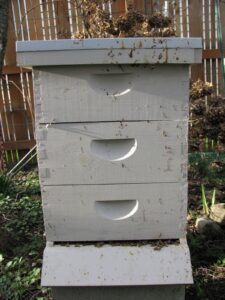
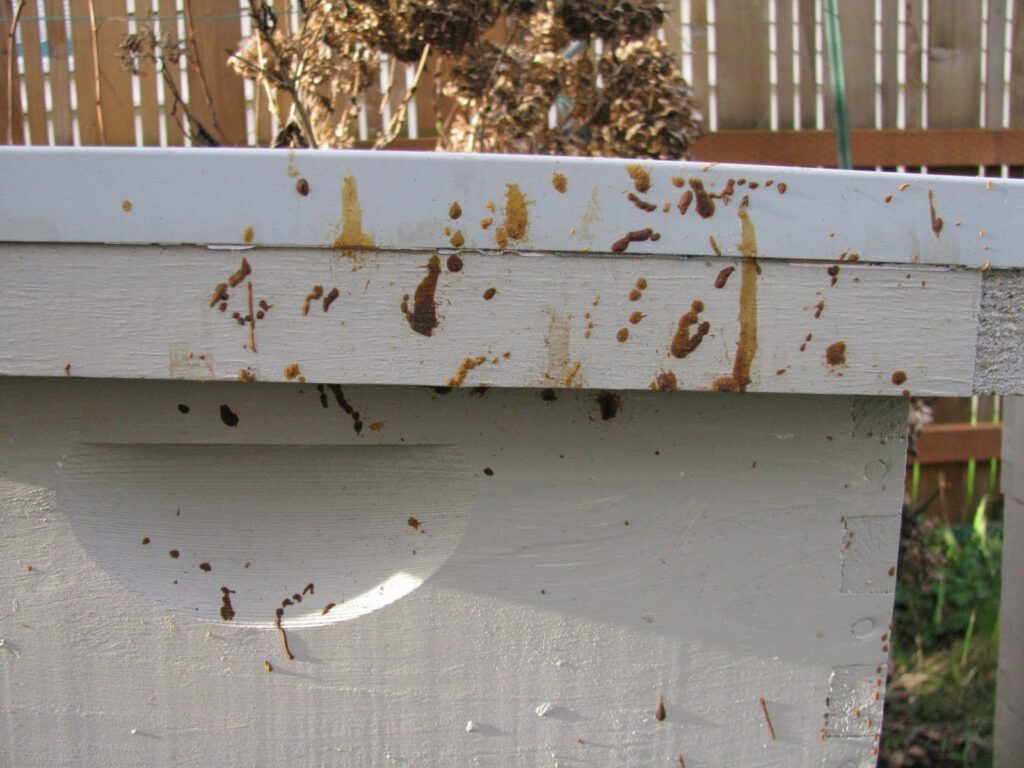
The hive pictured above is alive after a long and cold Seattle winter. The bees had not been able to fly for weeks. On the first day warm enough to take flight, they made the mess you can see coating the front of the hive — bee feces. The ground around the hives is also littered with yellow and brown spots.
I had not seen spotting this heavy before. The bees could have nosema, or they could have simply needed to relieve themselves after a long confinement. In any case, a diagnosis was needed. Additionally, I realized I need a microscope and the skills to properly identify bee diseases — or a mentor who can teach me.
Hard Seattle Winter for Bee Hives
Many of our hives have died between the end of January and the beginning of March. We put granulated sugar on top of the inner cover for emergency feed when we took a peek in January but evidently, that measure was not enough. We have 7 surviving hives out of 19 at the start of the winter. Ouch! Half of those hive deaths occurred this last month. I understand that this is the new normal in beekeeping. Bees are just not very robust. I do think that we closed down the hives for the winter too late last fall and we did not treat for any of the bee diseases. Our beekeeping needs to end by early September not early October. I don’t know what our bees died of so I do not know what diseases to treat for. I imagine that treating for varroa mites would not have hurt the bees. There are some new safe treatments on the market and I need to investigate to see if they are compatible with our low-tech, no-pesticide philosophy.
Hey Family Mine!
I got “The Hive Detectives” by L G Burns from the library for MEP to enjoy. And I just snuggled with #4, looking at pictures (very well photographed) and reading captions. “Oh yeah! I remember Grampa doing that!” he said at the photo of uncapping a frame. And, “That’s so gross,” at a picture of pollen from various flowers, stored in cells. I thought the mites and the pupae were gross, but what do I know?
Anyway, great book for talking to kids about bees & CCD. Seriously amazing photos.
Love you! EEP
Dear gallusrex,
Good to hear from you! Ask your librarian for “In a Tree Honey Bee” which is a children’s picture book about bees. I am reading “Fruitless Fall” for the second time. Watch for a review on this Blog.
Pat at SUH