

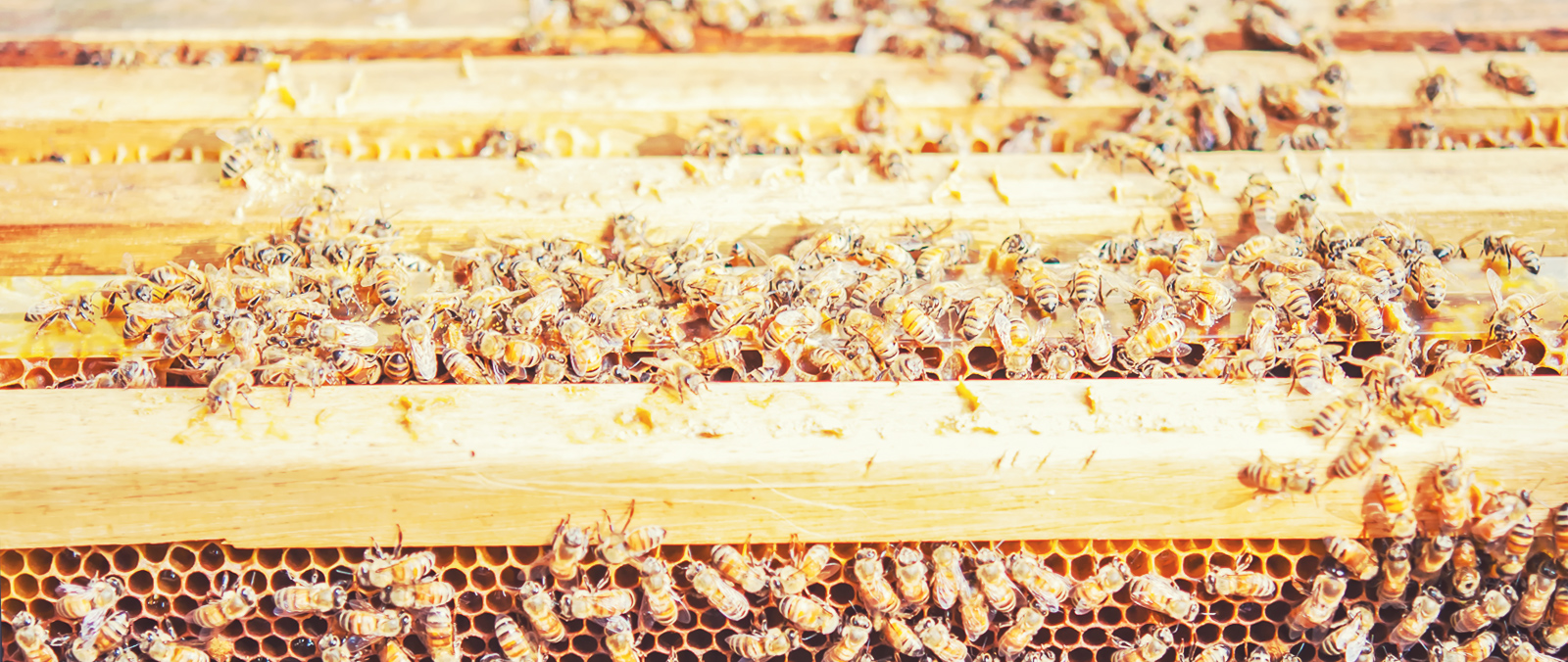
These seven beehives at the Urban Horticulture Center on the University of Washington campus represent the heart of our University District apiary. The UW UWCUH site has become one of our most productive locations in Seattle — diverse foraging plants, a fenced area, and relatively calm bees.
Managing a Queenless Hive After a Swarm
The hive on the far left of our current photo is the one that swarmed recently. When a hive swarms, the old queen flies off with approximately half the colony. The remaining bees are left with queen cells about to hatch. The first queen to emerge must then go through the hive killing any competitor queens before they hatch — otherwise, a secondary swarm with an unmated queen may occur.
Our last inspection showed no eggs, larvae, or capped brood — meaning no active queen. We chose to combine that hive with a swarm we had caught at a host home. To combine hives, we use the newspaper method: a sheet of newspaper placed on top of the queenless hive with slits cut in it, then the swarm hive placed on top. As a result, the bees chew through the paper slowly, giving them time to adjust to the new queen scent. The strongest queen wins any fight that follows.
Answering Swarm Calls in Seattle
In the last three days we have answered four swarm calls. Catching swarms helps make up for the hives we lost last winter — each swarm is a free colony. One was a small cluster and we combined it with a larger swarm. Additionally, we are starting to add honey supers to hives strong enough to support them. We are hoping to be at the Phinney Farmers Market by July 22. Blackberry blossoms are going strong and temperatures are finally in the mid-70s.